
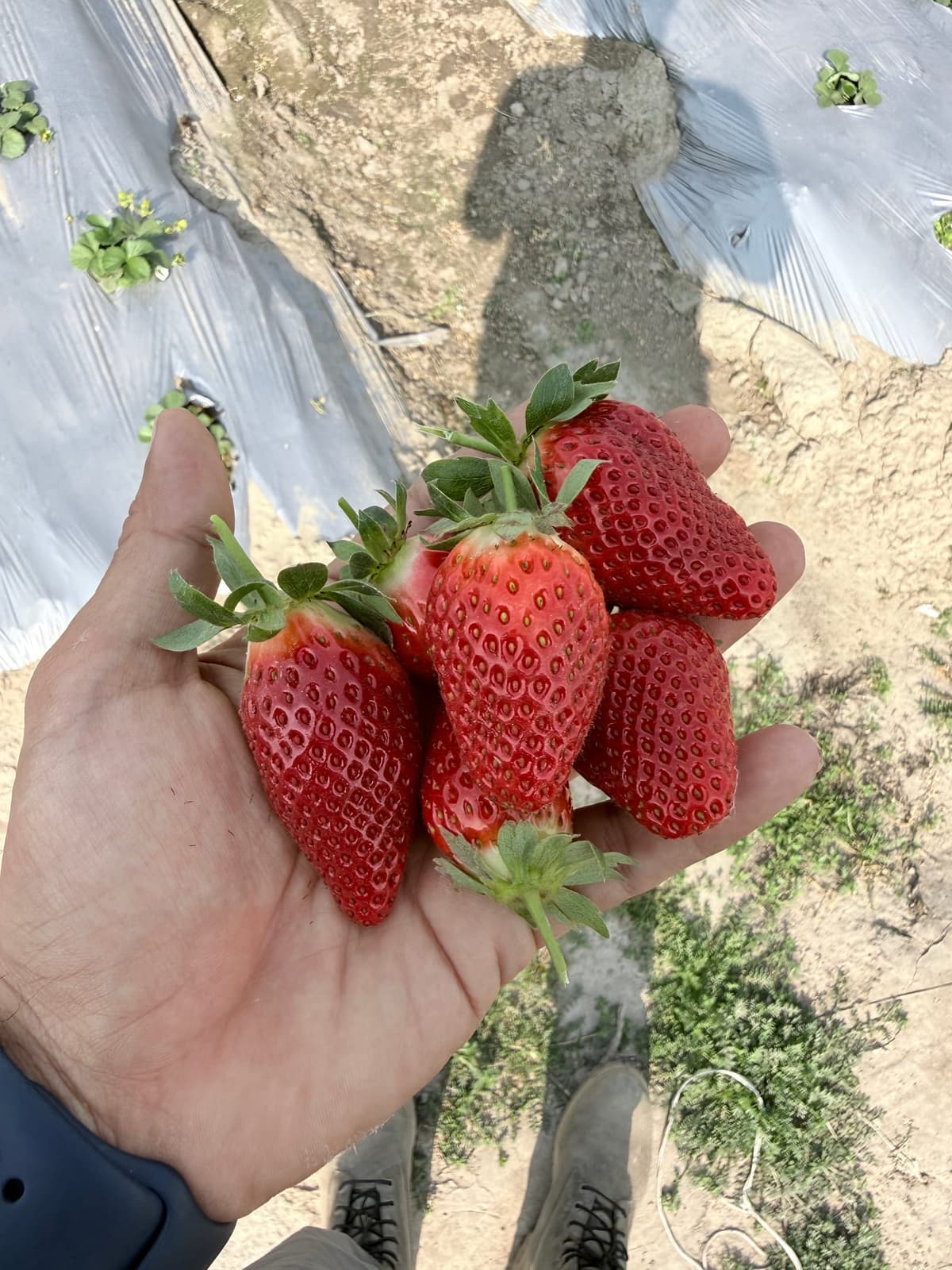
Commercial farming means growing crops, raising animals, or producing farm inputs mainly for sale rather than household use. In India, this includes wheat and paddy production in Punjab, dairy units, protected vegetable farms, strawberry cultivation, and organic-input businesses — all planned around harvests, quality, storage, and delivery for real buyers rather than family consumption alone.
By Growee Team Last updated: 2026-06-11
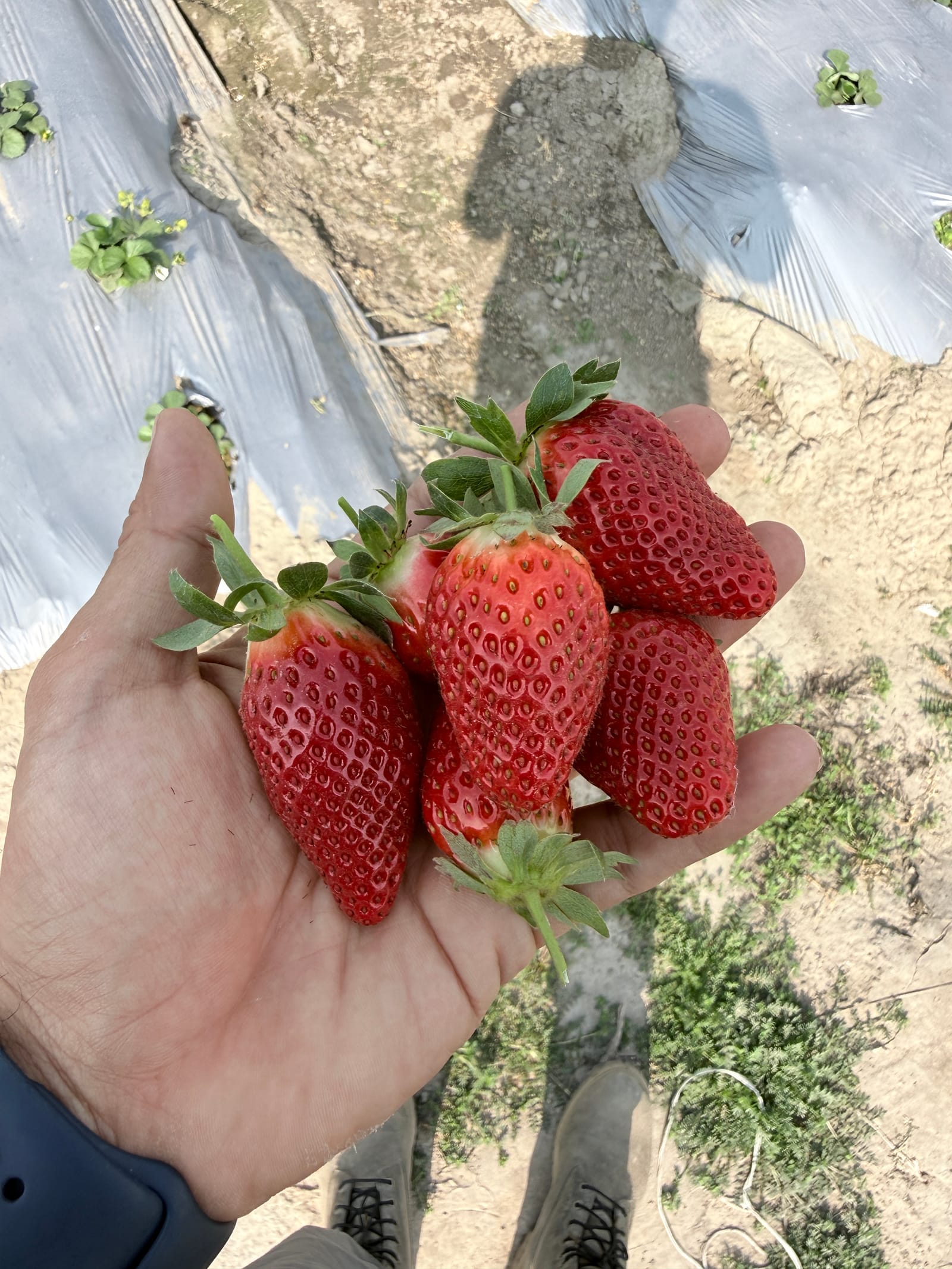
What Does Commercial Farming Mean?
Commercial farming means growing crops, raising animals, or producing farm inputs mainly to sell rather than for a household's own use. The farmer plans what to grow, how much to produce, and who the buyer will be — a local household, a mandi trader, a retailer, a restaurant, an online customer, or another farmer buying inputs. This is the opposite of subsistence farming, where most of what is grown stays with the farming family.
What does commercial farming mean in simple words?
Commercial farming is farming with a market purpose. The grower decides what to produce, how much to produce, when to harvest, how to grade produce, and where it will be sold. The buyer may be a local household, a mandi trader, a retailer, a restaurant, an online customer, or another farmer buying inputs such as compost, vermicompost, seeds, or organic fertilizer.
The basic difference from subsistence farming is the end goal. A subsistence farm family mainly grows food for its own kitchen, consuming most of what is produced. A commercial farm manages production as an income activity and plans for external buyers. A small farmer who sells part of a harvest while keeping the rest sits between both models — and that partial-commercial position is common among India's small and marginal farming households.
According to the Food and Agriculture Organization (FAO), which tracks global agricultural data across 195 member countries, commercial agriculture accounts for the majority of food calories entering global markets. The FAO's State of Food and Agriculture reports consistently note that even small-scale producers in developing economies increasingly sell a portion of their output, blurring the historical subsistence-commercial boundary. This context matters for India, where the National Sample Survey Organisation (NSSO) data on agricultural households has shown that a growing share of farm income comes from crop sales rather than self-consumption.
For Indian buyers, the question is not only whether farming is commercial, but how responsibly the food is produced and handled. A responsible commercial farm can focus on soil health, seasonal planning, lower waste, traceability, and shorter delivery routes. A poorly managed one can create problems through input overuse, weak soil care, or unclear sourcing.
What are the main characteristics of commercial farming?
Commercial farming carries several practical signs that distinguish it from backyard or subsistence growing:
Market-led planning. A grower studies demand before deciding what to plant or raise. Fresh strawberries are planned around a short seasonal window. Organic fertilizers and compost products are planned around year-round gardening and farm-input demand. Grain farmers in Punjab time planting around procurement calendar windows.
Scale and repeatability. Scale does not always mean thousands of acres. A protected cultivation unit in Mohali, a Punjab grain farm, a greenhouse vegetable setup, and a home-gardening input brand can all use commercial discipline at different sizes. The consistent element is that production volume matches a specific buyer group's needs.
Input planning. Soil nutrition, water, compost, manure, vermicompost, seeds, trays, bags, labour, and packaging must be arranged before the season starts. Bad input planning affects both crop quality and farm economics, and this is especially visible in fresh produce where shelf life depends partly on how the crop was fed and watered.
Post-harvest handling. Commercial farming does not end at harvest. Sorting, grading, cleaning, cooling, packing, labelling, and delivery matter. For fresh produce — soft fruit, leafy greens, mushrooms — the time from harvest to customer is as important as the growing decision.
Record keeping and financial discipline. Commercial growers track cost, yield, losses, customer feedback, repeat orders, and seasonal risk. Without records, a profitable crop can look identical to a losing one, especially when input costs shift between seasons.
Types of commercial farming with examples from India
Commercial farming is a broad category covering several distinct farm models. These are the main types visible in India and relevant to buyers in the Tricity and Punjab regions.
Commercial crop farming involves growing field crops at scale for sale — wheat, paddy, maize, pulses, oilseeds. Punjab and Haryana are the most prominent examples in India, where wheat procurement through the Food Corporation of India (FCI) and paddy through state agencies forms the economic backbone of many farming households. This is the model most people picture when they hear "commercial farming," but it is only one variant.
Horticulture farming covers fruits, vegetables, flowers, herbs, and nursery crops. It is where many buyers encounter commercial farming most directly. Strawberries from polyhouse farms in Himachal Pradesh and Punjab's fringe districts, cucumbers and tomatoes from Mohali-area greenhouse units, leafy greens for Chandigarh restaurants, and mushrooms for Tricity retail are all horticulture-scale commercial production. Maharashtra grapes and Nagpur oranges, or Punjab kinnow from Ferozepur and Fazilka, fall into this category at larger scale.
Greenhouse and polyhouse farming uses protected structures to manage temperature, humidity, and light, allowing production outside normal field seasons or in regions with challenging weather. Protected cultivation can improve quality consistency and reduce some pest pressures, but costs are higher and the farmer still has to get soil, water, and nutrition decisions right inside the structure.
Plantation farming involves large-area cultivation of a single cash crop, typically processed or exported. Indian examples include tea in Assam and Darjeeling, coffee in Karnataka and Kerala, rubber in Kerala, coconut along coastal states, and spices in Kerala and Karnataka. Plantation models are typically capital-intensive, involve long crop cycles, and connect to global commodity markets.
Livestock and dairy farming produces milk, eggs, meat, wool, or related products for sale. Dairy cooperative networks — including those connected to Amul in Gujarat — and poultry units in Andhra Pradesh, Telangana, and Punjab represent the commercial dairy and livestock spectrum. Feed quality, animal care, hygiene, and distribution chain management are central to product quality.
Contract farming involves a farmer growing a specific crop under an advance agreement with a processor, exporter, or retailer. The buyer typically specifies variety, quality standards, and volume in exchange for market access and sometimes input support. Contract farming has grown in vegetables, seed production, and processing crops across India, though the risk balance between farmer and buyer varies widely by contract terms.
Organic commercial farming means producing for sale while following organic or reduced-chemical production methods. A farm can be both commercial and organic — the Indian Organic market has grown steadily and APEDA's NPOP certification is used by farms that want to make verified organic claims or access export channels. Soil-focused vegetable farms, compost and vermicompost producers, and organic input manufacturers all operate commercially within this space.
For the practical transition behind that farming model, the Punjab organic farming guide covers soil testing, verified inputs, water constraints and buyer planning.
Benefits of commercial farming for growers and food buyers
Commercial farming creates structured food supply. Cities like Chandigarh, Mohali, and Panchkula need regular food movement, not only occasional garden harvests. Planned production helps more people access vegetables, fruits, grains, dairy, and farm inputs at predictable times and at prices that reflect seasonal production rather than scarcity-driven spikes.
For growers, commercial farming creates income, employment, and reasons to invest in better practices. A farm that sells regularly can justify better irrigation, composting, protected cultivation, packaging, and record keeping. Farm workers, packers, drivers, retailers, and agri-input suppliers all benefit from a working farm economy.
For buyers, the benefits are availability, choice, and consistency. A responsible commercial farm can offer graded produce, repeat supply, clear product information, and delivery options. This is useful for households that want seasonal fresh produce, cafés that need consistent ingredients, and home gardeners who need reliable inputs.
For the broader food system, commercial agriculture enables food security at scale. India feeds over 1.4 billion people, and the grain procurement system — centred heavily on Punjab's commercial wheat and paddy output — is a direct result of commercially organised production developed since the Green Revolution of the 1960s.
For soil and sustainability investments, the Indian Council of Agricultural Research (ICAR) — India's national agricultural research body, operating under the Indian Council of Agricultural Research Act — provides public research on crop varieties, soil science, and sustainable production methods. ICAR's publicly available research gives farmers region-specific guidance that is more reliable than general advice copied from unrelated growing contexts.
Commercial farming risks: soil, inputs, freshness, and trust
Commercial farming has real risks that buyers and growers should understand.
Soil health is the most serious long-term concern. Repeated monoculture without returning organic matter, rotating crops, or supporting soil biology reduces productivity over time. Soil is a living system of minerals, microbes, moisture, and organic carbon. Punjab's intensive wheat-paddy rotation has contributed to documented declines in soil organic carbon in many districts, and the Indian government's Soil Health Card scheme was partly a response to this widespread problem.
Water pressure in North India is a genuine planning issue. Commercial paddy cultivation requires high irrigation volumes, and groundwater-stressed areas in Punjab cannot sustain the same extraction rates indefinitely. Commercial farms that ignore water efficiency face both economic and environmental risk.
Input overuse is a third risk. Fertilizers and crop protection products are not automatically harmful in moderate, correctly timed use, but overuse or poorly timed application can damage soil biology, raise costs, reduce buyer trust, and create residue concerns. Buyers increasingly ask about growing practices, not just appearance.
Long supply chains affect freshness. A product harvested far away, held in storage, moved through multiple handlers, and displayed late can lose flavour, texture, and nutritional value. Fresh produce — especially soft fruit like strawberries, mushrooms, and leafy greens — needs careful harvest timing and quick delivery. This is where the distance between farm and buyer matters practically.
Pressure toward sameness is a subtler risk. If every commercial farm chases the same few profitable varieties, crop biodiversity can shrink. Local variety preservation, seasonal eating, and soil-building practices all help reduce that long-term vulnerability.
Commercial versus subsistence farming: the key practical differences
The clearest difference between commercial and subsistence farming is purpose: commercial production targets the market, while subsistence production targets the household. But several practical differences flow from that:
A subsistence grower chooses crops based on family food preferences, local habits, and available labour. A commercial grower also has to manage demand signals, selling prices, buyer expectations, transport, packaging, and shelf life. These are fundamentally different planning problems.
Financial risk is higher in commercial farming. Seeds, irrigation, crop protection, compost, labour, packaging, and transport all require upfront investment. If weather changes, disease spreads, prices fall, or transport delays accumulate, the grower may lose money on a season even with a good crop. This is why access to information — soil testing, variety selection, market channels, input guidance — matters more in commercial farming than in subsistence growing.
For consumers, the distinction explains why two similarly labelled products can taste or last differently. A product grown for long-distance transport may be selected for firmness and shelf life rather than flavour at peak ripeness. A product grown for a nearby delivery route can be harvested closer to optimal eating time. This is where farm-fresh produce from Growee and local city delivery options are relevant — the shorter the route from farm to door, the more the harvest timing can favour eating quality over transit durability.
The Punjab, Chandigarh, and North India angle
Punjab is one of India's most commercially organised farming regions, and its food systems shape what Chandigarh, Mohali, and Panchkula households can access every day. The region also shows why commercial farming cannot be discussed in only one tone.
On one side, commercial agriculture supports food supply, rural livelihoods, transport networks, and local markets. Punjab's output of wheat and rice has been essential to national food security. On the other side, the region has ongoing challenges around soil condition, groundwater depletion, crop diversity, farm income, and food quality at the consumer end.
For a Chandigarh household, the practical question may be: can I get fresher fruit or vegetables without guessing about their origin? For a Mohali terrace gardener, it may be: which soil input helps my containers hold nutrients better across a summer? For a Panchkula family, it may be: are strawberries available this week and are they carefully handled?
These are local, practical questions. Growee Farms connects to this regional need through fresh produce and soil-health products. Readers can explore fresh produce options through the fresh produce category and check current seasonal availability for their city.
How Growee connects farm practices with fresher customer choices
Growee Farms works at the meeting point of fresh food, soil inputs, and practical growing guidance. The approach is straightforward: bring farm-fresh produce from Tricity-area and partner farms closer to local buyers, and give home growers and small producers the inputs they need to grow better at any scale.
For food buyers, the useful connection is freshness and source clarity. Fresh strawberries are a clear example of produce where harvest timing, handling, and delivery speed matter more than packaging claims. The strawberry pages explain seasonal availability honestly rather than implying year-round supply that does not exist.
For growers and gardeners, the useful connection is soil. Healthy plants start below the surface. Organic matter, aeration, moisture balance, and sensible nutrition make a visible difference in containers, kitchen gardens, small farms, and protected growing setups. Soil products should be chosen based on crop type, pot size, field condition, and season.
For buyers who want to start improving their own growing setup, Growee's organic fertilizer and soil input range covers the practical starting points: compost for organic matter, vermicompost for soil biology, and crop-specific granular nutrition options. The right product depends on what you are growing and where.
FAQs about commercial farming
What is commercial farming in simple words?
Commercial farming is farming mainly for sale. A farmer or farm business grows crops, raises animals, or produces farm inputs with a buyer in mind — a household, retailer, restaurant, trader, or another farmer. The key difference from subsistence farming is that output is planned for the market rather than for family consumption. Scale can range from a small market garden to a large grain operation.
What are the main types of commercial farming?
The main types include commercial crop farming (wheat, paddy, maize), horticulture (vegetables, fruits, flowers, herbs), greenhouse and polyhouse farming, plantation farming (tea, coffee, rubber), livestock and dairy farming, contract farming, and organic commercial farming. In India, wheat and paddy in Punjab, Maharashtra grapes and sugarcane, Karnataka coffee, and Tricity fresh produce operations are all examples at different scales and crop categories.
How is commercial farming different from subsistence farming?
Commercial farming is planned for the market; subsistence farming is planned for the household. Commercial farming involves external buyers, cost recovery, and income generation. Subsistence farming prioritises food security for the growing family. Many Indian small farmers operate a partial-commercial model where some produce is sold and some is consumed, especially as urban demand for fresh produce expands.
What are the advantages and disadvantages of commercial farming?
Advantages include organised food supply, employment creation, income for farm households, and the ability to invest in better practices when markets work well. Disadvantages include higher financial risk, potential for soil depletion under monoculture pressure, water overuse, long supply chains that reduce freshness, and market price volatility. The quality of farming decisions, not the scale alone, determines which outcomes dominate.
Is commercial farming the same as organic farming?
No. Commercial describes the purpose — production for sale. Organic describes the method — avoiding prohibited synthetic inputs and following organic-certified or transparent growing practices. A farm can be both commercial and organic. An organic vermicompost producer selling to home gardeners, an NPOP-certified vegetable farm supplying city buyers, and a compost manufacturer all operate commercially within an organic or organic-aligned framework.
Can commercial farming be sustainable?
Yes, when the farm actively manages soil health, water use, biodiversity, and post-harvest waste. Sustainable commercial farming uses crop rotation, compost and organic matter additions, efficient irrigation methods, biological inputs where appropriate, and honest sourcing communication. The FAO's Sustainable Food and Agriculture framework — which covers over 195 countries — defines sustainability as the intersection of productivity, environmental stewardship, and rural livelihood support. That framing applies directly to Punjab farms that must manage both output and groundwater reality.
What should buyers in Chandigarh, Mohali, or Panchkula look for?
Look for seasonal availability, clear source information, sensible delivery timing, and honest product descriptions. For fresh produce, ask how quickly it reaches your area after harvest. For soil inputs, check usage guidance and choose products that match your garden, terrace container, or small-farm needs. A good seller explains what is actually available, not just what would be ideal to claim.
How can home gardeners support soil health with compost or vermicompost?
Add mature compost to improve organic matter and moisture retention. Use vermicompost to introduce biologically active nutrients and support root zone health. Apply organic fertilizer according to plant type, pot size, and growth stage rather than adding maximum amounts on a fixed schedule. Avoid overwatering, keep containers well aerated, and observe plant response before adding more product. Steady soil improvement over several growing cycles outperforms aggressive feeding in a single season.
Start with fresher produce or improve your own growing setup
Commercial farming explains how food and farm inputs move from production to buyers — but the most useful next step is practical and local. If you want seasonal produce with source clarity, check farm-fresh produce from Growee for current availability in your city. If you are building or improving a garden, terrace setup, or small growing space, compare organic fertilizers, compost, and vermicompost options based on your crop and soil condition rather than just a label.
For Tricity buyers, Growee currently serves Chandigarh, Mohali, and Panchkula with fresh produce and soil health products. For questions about which input fits your growing setup, use the product pages and contact options on the Growee website. Choose fresher food when it is in season, and build better soil when you grow your own — those two steps together are more practical than any farming theory.
References: The Food and Agriculture Organization (FAO) is cited because it is a United Nations agency covering food, agriculture, natural resources, and rural livelihoods across 195 member countries, providing authoritative global agricultural data and sustainability frameworks. The Indian Council of Agricultural Research (ICAR) is cited because it is India's national agricultural research body, providing India-specific crop science, soil research, and farming guidance relevant to Punjab and North India contexts.
Find Farm-Fresh Produce Through Growee Farms
Growee Farms connects Tricity consumers to responsibly managed commercial farms. Contact us to learn more about seasonal produce, delivery routes, and how we source what we sell.
Browse farm-fresh produce from Growee or explore the fresh produce category to see what is available this season. For delivery enquiries in Chandigarh, Mohali, or Panchkula, contact us through the website.