

How to store farm eggs is a fridge question, not a counter question. Put the eggs in their carton in a cold part of the refrigerator, and use a water float plus a crack-and-smell check when you are unsure about one. Growee Farms collects eggs on its Punjab farm and packs them for Wednesday and Sunday routes. The free-range egg page shows the next slot. It does not print a use-by date in this article, and a delivery day is not a promise of how long every egg will last.
The handling details below come from the USDA Food Safety and Inspection Service guide Shell Eggs from Farm to Table (updated 20 November 2024). Route and price facts are from Growee's egg page as it read on 30 September 2026. This is general food-safety guidance, not a health claim and not a medical recommendation.
What to do on delivery day
The egg page says eggs are collected daily and packed for the Wednesday and Sunday routes.
The route date you saw at checkout is the delivery day, not a laboratory test of each egg. Prices on that page on 30 September 2026 were ₹300 for 12 eggs and ₹550 for a 25-egg tray, prepaid. Confirm the live pack before you order, because stock and the next slot change. Coverage is by pincode around Chandigarh, Mohali and Panchkula. Check it on the free-range egg page.
Fridge, not the counter
USDA FSIS says to refrigerate shell eggs at 40°F (about 4°C) or below, in the carton, in the coldest part of the refrigerator rather than the door. Take them straight into the fridge. Do not leave them out for more than 2 hours.
Once eggs have been refrigerated, keep them cold. FSIS says a cold egg left at room temperature can sweat, and that moisture can help bacteria move into the egg. Any Salmonella present can also multiply at room temperature. This article does not recommend storing these eggs on the counter.
USDA's storage chart lists raw eggs in the shell at 3 to 5 weeks in the refrigerator, and it says not to freeze them in the shell. Treat that as general guidance for refrigerated shell eggs, not as a Growee guarantee. How long an egg stays usable still depends on how old it was and how it was stored before it reached you. Use eggs promptly and follow the date and handling information you have. An egg that smells wrong is not saved by a calendar. Growee does not state a separate "Wednesday eggs last this many days" figure, so this page does not invent one.
The float test
FSIS explains that a newly laid egg has essentially no air cell. As it cools and ages, an air cell forms, usually at the large end, and grows because moisture and carbon dioxide leave through the shell. A larger air cell is what makes an older egg float.
To check one egg:
- Fill a bowl with enough water to cover the egg.
- Lower the egg in.
- If it floats, the air cell has grown enough to hold it up. FSIS calls that poor quality. It may still be safe to use.
- Do not decide from the float alone. Crack the egg into a bowl and check it, as below.
A float is an age and quality cue. It is not a safety certificate, and an egg that sits on the bottom is not a promise that it was laid this morning. These checks can spot obvious spoilage but cannot show an egg is free of bacteria such as Salmonella; if in doubt, throw it out, and cook eggs until the yolk and white are firm.
The crack-and-smell check
Crack a doubtful egg into a clean bowl, not straight into a pan with other food. FSIS says to look for an off smell or an unusual appearance before you use or discard it. A spoiled egg has an unpleasant odour when the shell is broken, raw or cooked.
A few appearance notes from the same guide:
- A cloudy white is a sign the egg is very fresh.
- A clear white is a sign the egg is aging.
- A pink or iridescent white indicates spoilage. Discard it.
- Yolk colour follows the hen's diet. It is not a freshness score and not a nutrition ranking.
Bacteria can enter through a cracked shell. FSIS says not to buy cracked eggs. If a Growee egg arrives with a broken shell, do not store it with the intact eggs. Contact Growee with the order details if the pack is damaged. Do not taste an egg to test it.
Cook eggs until both the white and the yolk are firm. That is the USDA handling line for shell eggs. This page does not suggest raw or runny preparations.
How Wednesday and Sunday routes fit the clock
How long the eggs stay usable depends on how old they were and how they were stored before they reached you. Use them promptly, and follow the date and handling information you have. Growee packs for a named Wednesday or Sunday slot, and the product page shows that slot before you pay. This article does not know, and does not claim, the hour each egg was laid or a pack date beyond that route.
Practical version:
- Order the 12-egg pack or the 25-egg tray for the slot the page is offering.
- Keep the carton in the fridge, not on the counter and not in the door.
- Use the float, then the crack-and-smell check, for any egg you are unsure about.
- Use USDA's 3-to-5-week refrigerated chart only as general guidance. Discard an egg that smells off or looks spoiled.
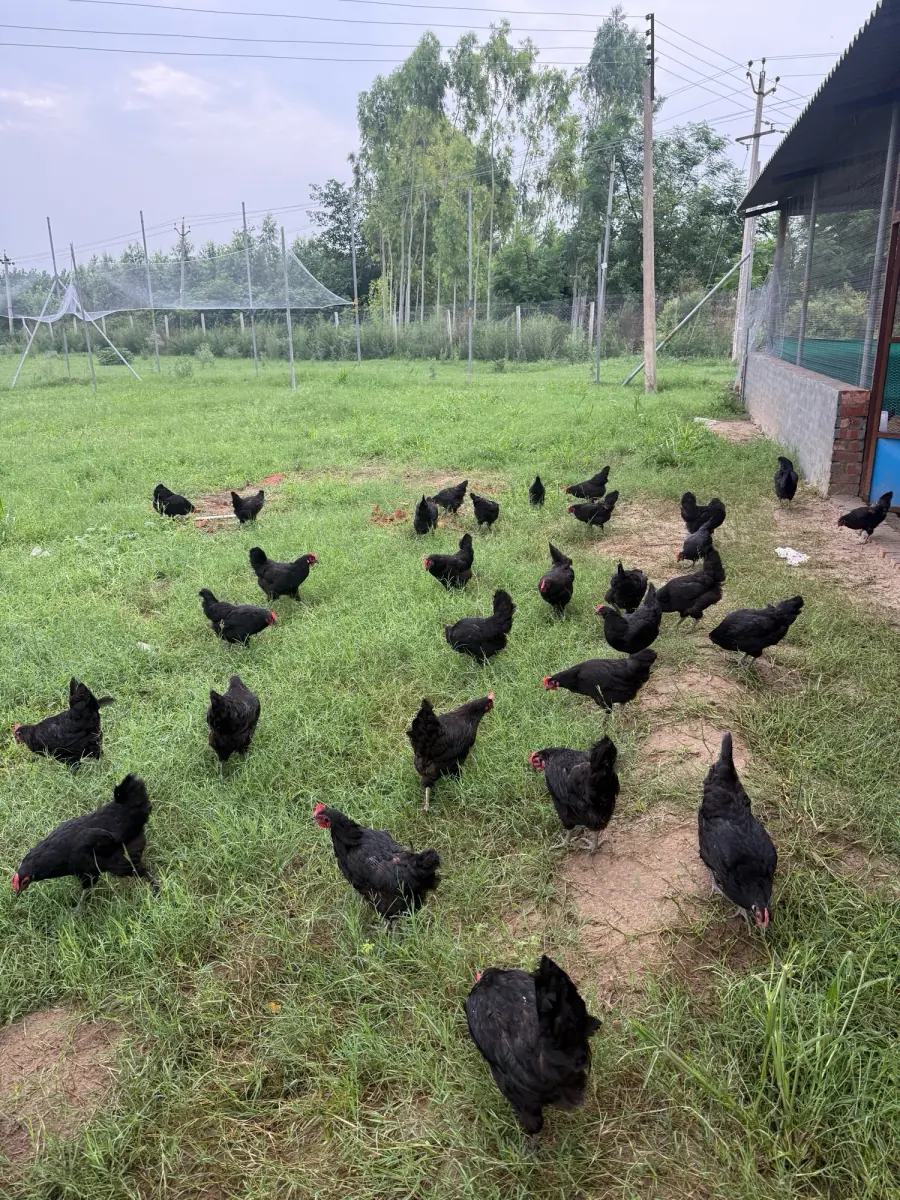
The flock and the tray you see on the egg page are the farm's own photographs. Our farm has the wider farm context. The desi eggs guide covers what desi means and repeats the short fridge note; it does not replace this storage check. Other farm products are on the fresh shop.
Questions about storing farm eggs
Can I leave farm eggs out overnight?
No. USDA FSIS says refrigerated eggs should not be left out more than 2 hours, and a cold egg at room temperature can sweat. Refrigerate them when they arrive.
Does a floating egg have to be thrown away?
Not by the float alone. FSIS says a floating egg is poor quality and may still be safe. Crack it into a bowl. Discard it if the smell is off, the appearance is unusual, or the white is pink or iridescent. Smell and appearance checks cannot show an egg is free of Salmonella; if in doubt, throw it out.
How long do Growee's Wednesday or Sunday eggs keep?
Growee does not publish a separate shelf-life number for a route day. Refrigerate them when they arrive. USDA's chart for raw eggs in the shell is 3 to 5 weeks in the refrigerator. That is general guidance, not a farm guarantee. Smell and appearance override the chart.